Bell Ringers That Actually Work: 7 Five-Minute Mandarin Warm-Ups for the Start of Class
5 min read by Tim
The bell rings. You're taking attendance, someone needs a pencil, and the room is loud, in English. By the time you're ready to start, five minutes are gone.
Those first five minutes don't have to be lost. A good bell ringer (some schools call it a "do now" or a lesson starter) gets students working in Mandarin before you've said a word. It reviews last lesson, it tells you who remembered what, and it buys you time to deal with the pencil.
Here are seven Mandarin warm-ups that need almost no prep, plus a simple way to rotate them so you're not reinventing the start of class every day.
What makes a bell ringer work
A few rules keep warm-ups useful instead of becoming one more worksheet:
- Same place, every day. Put it on the same slide or the same corner of the board. Students should know where to look without being told.
- Five minutes, with a timer. Show the countdown. When it hits zero, you start.
- Review, not new material. A bell ringer recycles what students met last lesson or last week. New content needs you; a warm-up shouldn't.
- One clear job. "Write three sentences" works. "Complete this worksheet" doesn't.
- Don't grade it. Glance, listen, and note who's stuck. That's the point.
1. One picture, three sentences
Put one photo on the screen: a busy street, a family dinner, a messy bedroom. Students write or say three things they see, using a frame:
- 我看到…… (wǒ kàndào, I see …)
- 有…… (yǒu, there is / there are …)
- 他在…… (tā zài, he is … -ing)
Beginners can list nouns. Stronger students can add colours, numbers and actions. One picture, every level has something to do.
2. Which one doesn't belong?
Write four words and ask 哪个不一样?(nǎge bù yíyàng, which one is different?):
- 苹果 香蕉 葡萄 飞机 (apple, banana, grape, plane)
Then the fun part: students explain why, in Mandarin if they can. 飞机不是水果 (fēijī bú shì shuǐguǒ, a plane isn't a fruit). Make later sets less obvious, so there's more than one right answer, and students have to argue for theirs.
3. Unscramble the sentence
Give the words of a sentence out of order:
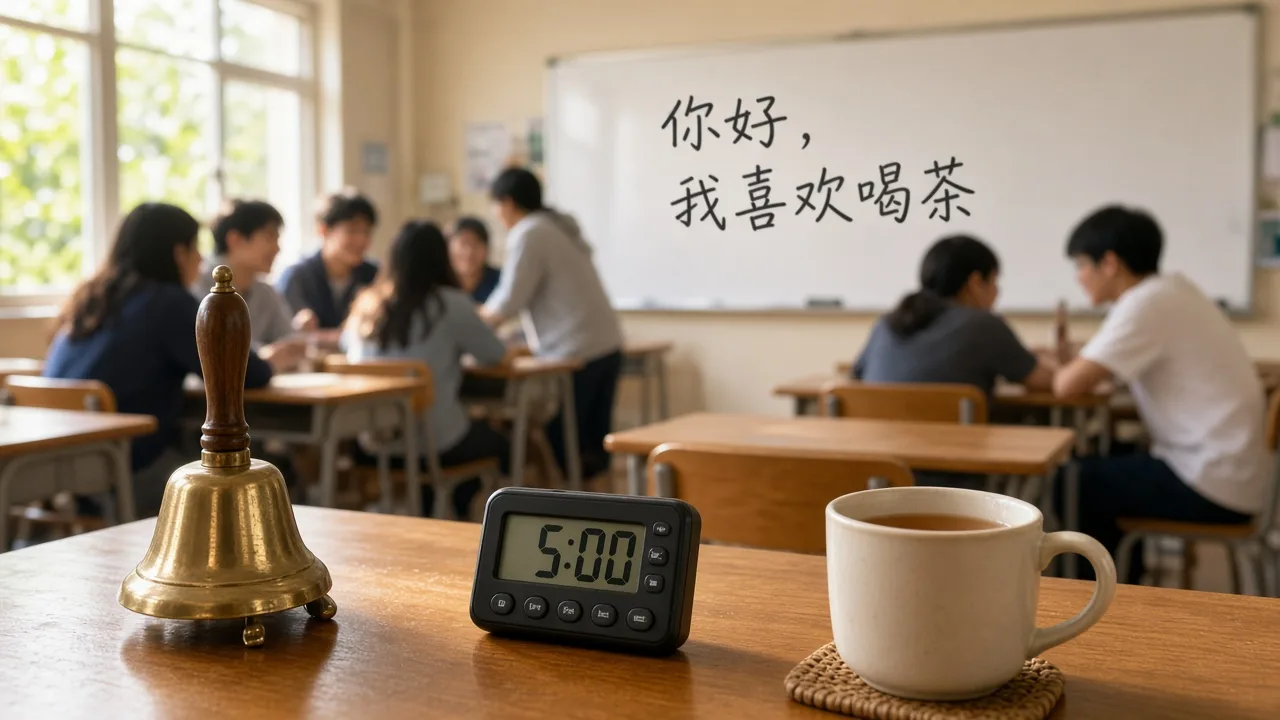
- 喝 / 我 / 茶 / 喜欢 → 我喜欢喝茶。
Word order is one of the first things beginners get wrong, and this practises it quietly. Use sentences from last lesson's dialogue so students half remember them. For a step up, add a time word (今天, 明天) and make them decide where it goes.
4. Finish the lyric
Play twenty seconds of a song the class already knows, then show one line with a gap:
- 一闪一闪亮晶晶,满天都是小____ (answer: 星星)
Students sing it before they write it, which is half the fun. It's the easiest warm-up on this list for a Monday morning, and it brings back vocabulary students learned weeks ago without anyone calling it review.
5. Number dictation
Read out a phone number, a price or a date, and students write the digits:
- 我的电话号码是 138 2046 5179。
- 这本书三十五块钱。
Numbers are everywhere in daily Mandarin, and they fade fast if nobody uses them. Let a student read the next one. They'll get much more careful when the class is copying them down.
6. Two-minute partner question
Post one question and one answer frame. Partners ask and answer, then swap:
- 你昨天晚上做了什么?(nǐ zuótiān wǎnshang zuò le shénme, what did you do last night?)
- 我昨天晚上…… (wǒ zuótiān wǎnshang …)
Walk around and listen. In two minutes you'll know who has the pattern and who's still building it. Pick a question from the current unit, and repeat it for a few days before you change it.
7. Would you rather?
Ask a choice question with 还是 (háishi, or):
- 你喜欢猫还是狗?(cats or dogs?)
- 你想去北京还是上海?(Beijing or Shanghai?)
Students answer with 我喜欢…… and one reason with 因为 (yīnwèi, because). It's quick, it's personal, and it's a sneaky way to drill 还是 and 因为 every week. Teens will argue about cats and dogs for longer than you'd expect.
A weekly rotation
Variety keeps warm-ups fresh, but changing format every day costs you prep and costs students time working out what to do. A fixed weekly rotation gives you both:
- Monday: finish the lyric
- Tuesday: one picture, three sentences
- Wednesday: unscramble the sentence
- Thursday: number dictation
- Friday: would you rather?
Students learn the format once, and you only change the content. Keep "which one doesn't belong?" and the partner question as backups for days that need more talk or less noise.
Common traps
- Letting it run long. A great warm-up can eat fifteen minutes. Stop at the timer, even when it's going well.
- Making it new material. If students can't start without help, it's too hard for a bell ringer.
- Going over every answer. Check one or two out loud and move on.
- Starting in English. Put the instructions on the slide in simple Mandarin with an example, and point.
Where to start this week
If you only try one, try "finish the lyric." It needs one song and one sentence with a gap, students start singing before the bell has finished, and the room is in Mandarin from the first minute.
If you'd like a library of songs ready for warm-ups like these, Song Club has the song videos, and Club Lǎoshī adds printable lyric sheets and activities. Need a song for your current unit? Try the Song Topic Finder.
More classroom song videos and printables live at chinesebuddy.com.
Tim is the original founder, creator and dreamer of all things on Chinese Buddy. He can be contacted here.
上课铃一响就开练:7个五分钟中文课堂热身活动
上课铃响了。你在点名,有学生要借铅笔,教室里吵吵闹闹,说的全是英文。等你准备好开始上课,五分钟已经过去了。
这五分钟其实不必浪费。一个好的课前热身(有的学校叫 "do now" 或 "lesson starter")能让学生在你开口之前就开始用中文做事。它能复习上节课的内容,让你看出谁还记得什么,还给你留出时间处理那支铅笔。
下面是七个几乎不用准备的中文热身活动,再加上一个简单的轮换办法,让你不用每天重新设计上课的开头。
好的课前热身有什么特点
几条规则,能让热身活动真正有用,而不是又多一张练习纸:
- 每天同一个位置。 放在同一张幻灯片或黑板的同一个角落。学生不用你提醒就知道往哪儿看。
- 五分钟,用计时器。 把倒计时放出来。时间一到,就开始上课。
- 复习,不教新内容。 热身是循环使用学生上节课或上周学过的东西。新内容需要你来教,热身活动不应该依赖你。
- 只做一件事。 "写三个句子"可以。"完成这张练习纸"不行。
- 不要打分。 看一眼、听一听,记下谁卡住了。这才是重点。
1. 一张图,三句话
在屏幕上放一张照片:热闹的街道、一家人吃晚饭、乱糟糟的卧室。学生用句型写出或说出三件看到的东西:
- 我看到……
- 有……
- 他在……
初学者可以只说名词,程度好的学生可以加上颜色、数字和动作。一张图,每个程度的学生都有事做。
2. 哪个不一样?
写出四个词,问学生"哪个不一样?":
- 苹果 香蕉 葡萄 飞机
接下来是有趣的部分:让学生说明理由,能用中文就用中文,比如"飞机不是水果"。之后的题目可以设计得不那么明显,让答案不止一个,学生就得为自己的答案辩护。
3. 连词成句
把一个句子的词打乱顺序给学生:
- 喝 / 我 / 茶 / 喜欢 → 我喜欢喝茶。
语序是初学者最早犯错的地方之一,这个活动能悄悄地练习它。用上节课对话里的句子,学生会有一半的印象。想提高难度,就加一个时间词(今天、明天),让他们决定放在哪里。
4. 补全歌词
播放一首全班已经会唱的歌,放二十秒,然后展示一句留了空的歌词:
- 一闪一闪亮晶晶,满天都是小____(答案:星星)
学生会先唱出来再写下来,这本身就很好玩。这是本文中最适合星期一早上的热身活动,它能把几周前学过的词带回来,却没人觉得是在复习。
5. 数字听写
念一个电话号码、一个价格或一个日期,学生写下数字:
- 我的电话号码是 138 2046 5179。
- 这本书三十五块钱。
数字在日常中文里无处不在,没人用就很快会忘。下一个让学生来念,全班都在抄的时候,他们会认真得多。
6. 两分钟同伴问答
贴出一个问题和一个回答句型。同伴一问一答,然后交换:
- 你昨天晚上做了什么?
- 我昨天晚上……
在教室里走一走、听一听。两分钟内你就知道谁掌握了这个句型,谁还在练习。从当前单元里选问题,连续用几天再换。
7. 你选哪个?
用"还是"问一个选择题:
- 你喜欢猫还是狗?
- 你想去北京还是上海?
学生用"我喜欢……"回答,再用"因为"说一个理由。又快又贴近生活,还能每周悄悄地练"还是"和"因为"。青少年为猫和狗能争论得比你想象的还久。
每周轮换
变化能让热身保持新鲜,但每天换形式,你要多花准备时间,学生也要花时间弄清楚该做什么。固定的每周轮换两全其美:
- 星期一: 补全歌词
- 星期二: 一张图,三句话
- 星期三: 连词成句
- 星期四: 数字听写
- 星期五: 你选哪个?
学生只要学一次形式,你只需要换内容。"哪个不一样?"和同伴问答留作备用,在需要多说话或少一点吵闹的日子用。
常见误区
- 时间拖太长。 好的热身可能会占掉十五分钟。计时器一响就停,哪怕进行得很顺利。
- 变成教新内容。 如果学生没有帮助就开始不了,那对热身来说就太难了。
- 每个答案都讲一遍。 大声核对一两个就继续。
- 用英文开头。 把指令用简单的中文写在幻灯片上,配一个例子,然后指一指。
这周从哪里开始
如果只试一个,就试"补全歌词"。只需要一首歌和一句留空的歌词,铃声还没停学生就开始唱了,教室从第一分钟起就是中文的。
如果你想要一整套现成的歌曲来做这样的热身,Song Club 提供歌曲视频,Club Lǎoshī 还附有可打印的歌词纸和活动。想找一首适合当前单元的歌?试试 Song Topic Finder。
更多课堂歌曲视频和打印练习,见 chinesebuddy.com。
Tim 是 Chinese Buddy 的原创创始人、内容创作者和梦想实践者。如需联系,可在此留言。